Embroidery Machine Thread Keeps Breaking: Causes and Fixes
If your embroidery machine thread keeps breaking, check the needle first. The thread path, the spool and the machine speed come next, and the tension setting comes last.
On this page (15 sections)
- Where does the thread break, and what does that tell you?
- Is the needle causing the thread to break?
- Does the thread path cause breaks?
- Can the bobbin area cause breaks?
- Does the spool or thread quality cause breaks?
- Does a thread stand or storage help?
- Does machine speed cause thread breaks?
- Why does thread break more on some designs?
- Can a loose hoop make thread break?
- What should you do when a thread breaks mid-design?
- Is a test design worth the time?
- How do you tell if tension is the cause?
- Is sewing thread the cause?
- Which thread should you try first when breaks keep happening?
- When embroidery machine thread keeps breaking, fix it in this order
If your embroidery machine thread keeps breaking, check the needle first, since a dull, bent or wrong size needle is one of the most common causes. The thread path, the spool and the machine speed come next, and the tension setting comes last.
This guide works through those causes in that order, with the products that help at each step. If you're still choosing a machine, embroidery machines for beginners compares the models.
Where does the thread break, and what does that tell you?
The spot where the thread breaks usually points to the cause, so look before you change anything. Use the table to match the break to a first check.
| Where it breaks | What it usually means | Check first |
|---|---|---|
| Frays at the needle eye | A burr on the needle, or the wrong size | A fresh needle |
| Snaps a few inches above the needle | Thread catching on a guide, a cap or a spool edge | The thread path |
| Breaks near the spool | A spool that wobbles or unwinds unevenly | The spool pin and any net |
| Snaps in a dense area | Too much speed or strain on the thread | Slower speed, then a test design |
| Breaks with loops or bobbin thread on top | Top thread pulled too tight | The tension checks |
Is the needle causing the thread to break?
Often, yes, since a dull, bent or wrong size needle can shred thread at the eye or in the groove. Swap in a fresh needle as soon as the thread starts to shred.
Unplug the machine before you change a needle, and keep your fingers clear of the needle area. Put the new one in the way your manual shows, which on most home machines puts the flat side toward the back.
Embroidery machine needles explains which size to use and when to change it.
SCHMETZ says its Gold needles have a titanium nitride coating that resists wear, plus an enlarged eye and a medium ball point that help metallic and rayon thread glide without shredding.
The Gold pack is size 90/14, which SCHMETZ says suits medium to heavy fabrics such as denim. Light fabrics often call for a smaller needle such as a 75/11, so check your manual before you switch sizes.
How often should you change the needle?
Change the needle when you see repeated breaks or skipped stitches, since those signs often show up before a needle looks clearly damaged. Keep a few spare needles of the same size in a case, so a swap takes seconds.
Does the thread path cause breaks?
Yes, thread that catches on a guide or the spool cap can snap when the machine pulls it through. Rethread from the spool to the needle with the presser foot up, and check each guide for thread that catches.
The manual shows the path for your model, so use it rather than a guess.
Can the bobbin area cause breaks?
Yes, lint or a badly seated bobbin can make the thread drag and snap. Clean the bobbin area with the lint brush that came with your machine, then reseat the bobbin the way the manual shows.
If the thread breaks right after a bobbin change, start here before you blame the top thread.
Does the spool or thread quality cause breaks?
Yes, a spool that unwinds badly or thread that snags can break under the strain of stitching. Thread quality matters too, since some polyester threads are built to resist breaking.
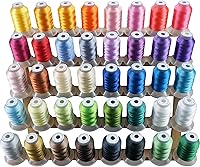
Simthread says its 63 color kit uses 100% trilobal polyester, which the brand says gives higher tenacity and sheen. Simthread's tips for its spools are to take off the protective film, keep the thread unwinding, and make sure the spool is fixed.
Simthread also lists needle sizes 75 to 90 for its thread, which covers both a 75/11 and a 90/14.
Embroidery thread breaking at the spool
A spool that wobbles on its pin can pull the thread unevenly and lead to breaks. Set the spool so it turns freely and sits steady before you start stitching.
Does a thread stand or storage help?
It can, since a stand that keeps each spool apart stops loose thread from snagging on its neighbors. Embroidex says its rack holds up to 60 spools of almost any size and keeps each one well supported and separate.
Our thread organizer roundup compares racks and boxes if you need more room.
What do thread nets and snips do?
Thread nets are small mesh sleeves that slip over a spool to keep the loose end from unwinding on its own. New brothread's 40 color set with a storage box includes thread nets, yarn snips and a color chart.
Cut thread tails with snips rather than pulling them.
Does machine speed cause thread breaks?
It can, since fast stitching puts more strain on the thread. A thread that holds at slow speed may snap once the machine picks up pace.
Simthread suggests 600 to 800 RPM for its thread, so start at the low end on a new spool and speed up only when the stitches run clean. Your manual lists the speed range for your model.
Why does thread break more on some designs?
Dense designs stitch the same spot many times, which puts more strain on the thread in that area. A thread that held on a small, light design can break on a large, dense one even when nothing else has changed.
Slow down for dense areas, and check that the fabric is hooped flat with enough stabilizer behind it. Do you need stabilizer for embroidery explains how much support a design needs.
Can a loose hoop make thread break?
It can, since fabric that bounces in the hoop makes the needle and thread work harder. Rehoop the fabric snug and flat so it can't shift while the needle works.
Embroidery hoop sizes explained covers picking a hoop that fits the design.
What should you do when a thread breaks mid-design?
Stop the machine as soon as the thread breaks, so the needle doesn't keep stitching without thread. Pull the broken end out of the path, and check that the thread still sits in each guide before you restart.
Trim the frayed end with snips and rethread the top from the spool. If the break happens in the same spot twice, that spot is the first place to look.
Is a test design worth the time?
Yes, a short test design shows a break early, before you commit to a long design that keeps stopping. Use the same needle, stabilizer and spool you plan to use for the project, and watch the first few inches of stitching.
How do you tell if tension is the cause?
Tension can cause breaks when the top thread is pulled too tight, and you'll often see bobbin thread on top as well. If the break comes with those signs, follow how to fix embroidery machine tension problems.
Is sewing thread the cause?
Sometimes, since sewing thread and embroidery thread are made for different jobs. Embroidery thread vs sewing thread explains the difference in plain words.
Which thread should you try first when breaks keep happening?
Try a 40 weight polyester embroidery thread first, since both thread kits in this guide use that weight. Simthread and New brothread both describe their polyester as strong, and New brothread says polyester's elasticity and tenacity lower the risk of breaking.
Keep the same brand and weight for a whole project, so you can tell whether the problem follows the thread or the machine.
When embroidery machine thread keeps breaking, fix it in this order
Start with the needle, then the thread path, the spool and the speed, and leave the tension setting for last. That order finds the cause before you change any settings.
- Break at the needle eye: change the needle.
- Break near the spool: check the spool, its net and the stand.
- Snap in the middle of a stitch: slow down, then check the tension.
If the thread still breaks after all of this, a service shop can check the thread path, and Brother USA has support pages for Brother machines.
Keep a small kit by the machine with a needle card, snips, a few thread nets and a color chart. Having each one on hand makes it quicker to test a fix.
Frequently asked questions
Why does embroidery machine thread keep breaking?
The usual causes are a dull or wrong size needle, thread that snags in the path, a spool that wobbles, and running the machine too fast. Check the needle first, then the thread path, the spool and the speed, and leave the tension setting for last.
Can a dull needle make thread break?
Yes, a dull, bent or wrong size needle can shred thread at the eye or in the groove, which leads to repeat breaks. Put in a fresh needle of the size your manual lists, and stitch a short test before you change anything else.
Is polyester thread less likely to break?
Brands make that claim, but the proof is on your own machine. Simthread says its trilobal polyester has higher tenacity, and New brothread says polyester's elasticity and tenacity lower the risk of breaking, though the needle, thread path and spool matter just as much.
Should I slow the machine down if thread breaks?
Often, yes, since fast stitching strains the thread. Simthread suggests 600 to 800 RPM for its thread, so start at the low end on a new spool, speed up only when the stitches run clean, and make sure the spool sits fixed on its pin.