Do You Need Stabilizer for Embroidery?
Yes, you need stabilizer for embroidery on most projects. It keeps the fabric from shifting and puckering while the needle stitches.
On this page (10 sections)
- Why does embroidery need a stabilizer?
- Which fabrics need stabilizer the most?
- What are the main types of stabilizer?
- How much stabilizer should you use?
- How do you know if your project needs stabilizer?
- Can a hoop replace stabilizer?
- Which stabilizer should you pick for your fabric?
- Do hats and towels need stabilizer too?
- How do you remove stabilizer after stitching?
- Do you need stabilizer for embroidery on every project?
Yes, you need stabilizer for embroidery on most projects. Thread pulls on the fabric with every stitch, and without support the cloth can shift, pucker or stretch out of shape.
Firm, tightly woven fabric with a light design can sometimes get by with less. Stretchy knits, fleece and towels almost always need it.
This guide covers why stabilizer matters, the four main types and how to match one to your fabric. If you're just starting out, embroidery machines for beginners covers the rest of the setup.
Why does embroidery need a stabilizer?
Because the needle pulls on the fabric with every stitch, and fabric alone can't stay still for a whole design. A stabilizer gives the cloth a firm base under the needle.
The machine stitches the same area many times to build a design. The stabilizer takes that pull, so the fabric stays flat and the stitches land where the design says they should.
It sits in the hoop with the fabric. How you remove it afterward depends on the type you pick.
What goes wrong without stabilizer
Without support, the fabric shifts during stitching. That often shows up as puckers around the design, a wavy outline or a shape that drifts out of line.
Stitches can also sink into soft or fluffy cloth. Towels and velvet do this the most.
Which fabrics need stabilizer the most?
Stretchy and soft fabrics need it the most, because they move under the needle. Knits and fleece usually need firm, lasting support.
New brothread says its cut away roll is meant for knits, fleece, denim and any fabric that moves or distorts when tugged. For fluffy fabric, the brand says its water soluble topping keeps stitches from sinking into towels, velvet and corduroy.
Firm woven cotton is the steadiest of the common fabrics. New brothread says its tear away works best on firmly woven fabrics and natural fibers, so woven cotton is a good place to start.
What are the main types of stabilizer?
Most embroidery stabilizers fall into four groups: tear away, cut away, water soluble and no show mesh. Each suits different fabrics, and some projects use two types together.
Tear away stabilizer
Tear away stabilizer is temporary support that you remove after stitching. You tear the extra away from around the design, and the stitches stay put.
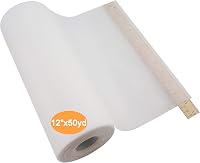
New brothread's 12-inch tear away roll is 50 yards long and a medium weight at 1.8 oz (50 grams). The brand says it works best on firmly woven fabrics and natural fibers, and you can layer it for denser designs.
Cut away stabilizer
Cut away stabilizer stays in the finished piece, so it suits stretchy fabric. You trim the extra close to the design, and the rest stays behind as permanent support.
New brothread calls its 10-inch cut away roll a medium weight at 2.5 oz (70 grams). The brand says it helps the design hold its shape after repeated washing, and it's meant for knits, fleece and denim.
Water soluble topping
Water soluble topping sits on top of the fabric instead of underneath. It dissolves when you soak the piece in cold or warm water.
New brothread's topping film is about 25 microns thick and comes as a 10-inch by 10-yard roll. The brand describes it as transparent, and says it dissolves completely and leaves nothing behind.
No show mesh
No show mesh is a soft, semitransparent cut away, so it doesn't show through light-colored fabric. New brothread says it suits stretchy knits in light colors, such as polo shirts and T-shirts.
For a denser design, the brand suggests a light tear away under the mesh. Once the stitching is done, you can tear that layer off and leave the soft mesh in place.
How much stabilizer should you use?
Use one layer cut larger than your hoop for light to medium designs, and add a second layer for dense ones. The hoop needs to grip the stabilizer along with the fabric.
New brothread's example for its 10-inch cut away roll is an 8 by 10 inch piece for a 4x4 hoop and a 10 by 12 inch piece for a 5x7 hoop. Both its tear away and cut away rolls are medium weight, and the brand recommends more than one layer for denser designs.
How do you know if your project needs stabilizer?
If the fabric is stretchy, soft or thin, it almost always needs stabilizer. Those fabrics move the most under the needle.
Hoop a scrap of the same fabric and stitch a small design. If the cloth shifts, puckers or the design comes out wavy, add a stabilizer and stitch it again.
Watch for three signs: the fabric moves under the hoop, the stitches sink into the cloth, or the design looks uneven once it's finished. Any one of them means the project needs more support.
Do you need stabilizer for a thin fabric?
Yes, thin fabric usually needs stabilizer, because it has little body to resist the pull. The trick is picking one that doesn't leave the piece stiff.
New brothread says its no show mesh avoids the bulk and stiffness of other permanent stabilizers, and that it suits silk and satin as well as light knits.
Can a hoop replace stabilizer?
No, a hoop holds the fabric in place, but it can't support the cloth itself. Stabilizer adds that support, so hoop it together with the fabric.
Pulling a stretchy knit tight in the hoop can also stretch it out of shape. A stabilizer helps the fabric resist that pull, so the design lands closer to where you planned.
Which stabilizer should you pick for your fabric?
Match the stabilizer to the fabric, not just the design. Firm woven fabric usually suits tear away, while knits, fleece and denim usually need cut away or a mesh.
If you're deciding between the two most common types, our cutaway vs tearaway guide explains the difference in plain terms. For a fabric-by-fabric list, read how to choose an embroidery stabilizer by fabric.
If you're weighing the tear away roll above, our New brothread tear away review covers it in more detail.
Do hats and towels need stabilizer too?
Yes, but each one needs a different kind of help. Towels do best with a water soluble topping on top, and caps need a hoop made for them.
Most home machines are single-needle and flat-bed, so caps need a cap hoop or cap frame, which is usually sold separately. Check that the hoop names your exact machine model before you buy.
For a full pick list, see best stabilizer for knits, towels and hats. Can a home embroidery machine stitch hats? covers the machine side of caps in more detail.
How do you remove stabilizer after stitching?
It depends on the type. Tear away tears off, cut away gets trimmed close to the design, and water soluble dissolves in water.
Pull tear away gently away from the stitches, so the design stays in place. Cut away stays in the piece as permanent support, so you only trim the extra around the stitching.
Water soluble rinses away completely, so nothing is left in the finished piece. Use cold or warm water until no film is left on the fabric.
Sweep up the scraps when you finish, and keep them away from pets.
Do you need stabilizer for embroidery on every project?
No, but on most projects you do, and the fabric decides the type. Use this as a quick rule.
- Tear away for firm woven cotton and other natural fibers.
- Cut away for knits, fleece and denim.
- Water soluble topping on top of towels, velvet and corduroy.
- No show mesh for light-colored knits where the backing must stay hidden.
Start with the fabric in front of you, then check the stabilizer types before you buy anything.
Frequently asked questions
Do you need stabilizer for embroidery on every project?
Most projects need one, but not all of them. Firm, tightly woven fabric with a light design can sometimes stitch with less, while stretchy knits, fleece, towels and velvet almost always need stabilizer because the cloth can shift or sink under the stitches.
What happens if you skip stabilizer?
The fabric can shift, pucker or stretch while the machine stitches, so the design may come out wavy or out of line. A hoop alone often isn't enough for stretchy fabric, and a stabilizer gives the cloth a firm base so the stitches land where they should.
Can you use tear away stabilizer on knits?
Usually not, because New brothread says its tear away works best on firmly woven fabric and natural fibers, and knits stretch more than those do. For most knits, a cut away or a no show mesh holds the design better, so pick one of those two instead.
Does a hoop replace stabilizer?
No, a hoop holds the fabric still but can't add support to the cloth itself, and stabilizer does that job. Hoop it together with the fabric, and avoid pulling a stretchy fabric too tight, since that can stretch it out of shape before you stitch.