How to Choose an Embroidery Stabilizer by Fabric
Choose embroidery stabilizer by how the fabric moves: tear away for firm woven cloth, cut away or no show mesh for knits, and water soluble topping for towels and fluffy fabric. Test on a scrap of the same cloth before you stitch the real piece.
On this page (16 sections)
- Embroidery stabilizer by fabric at a glance
- Why stretch matters under the hoop
- Test the stretch before you choose
- Woven fabric takes tear away
- Knits and stretch fabric take cut away
- Light-colored fabric takes no show mesh
- Towels and fluffy fabric take water soluble topping
- Cut the piece to fit your hoop
- Pick the roll width for your hoop
- Stitch density and how many layers
- Caps and hats need a cap hoop
- Leather and unusual fabric need a test
- Removing each stabilizer cleanly
- A starter set for most projects
- Common mistakes to avoid
- Choose embroidery stabilizer by fabric before you stitch
How to choose embroidery stabilizer by fabric comes down to one question: how much does the cloth move under the hoop? Firm woven fabric usually takes a tear away, stretchy knits take a cut away, and towels or fluffy fabric need a water soluble topping.
This guide sorts common fabrics into groups and matches each group to a stabilizer type. We compared four New brothread rolls and checked their specs, so each pick is tied to what the brand says the roll does.
Embroidery stabilizer by fabric at a glance
Firm woven cloth takes tear away, knits take cut away, light-colored knits take no show mesh, and towels take water soluble topping over a backing. The table lists each fabric group, the stabilizer type and the roll from this guide.
| Fabric | Stabilizer type | Roll from this guide |
|---|---|---|
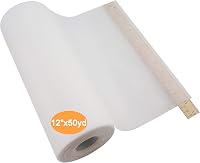
| Cotton, linen and canvas (firm woven) | Tear away | New brothread tear away, 12 in x 50 yd |
| T-shirts, polos, knits and fleece | Cut away | New brothread cut away, 10 in x 50 yd |
| Denim | Cut away | New brothread cut away, 10 in x 50 yd |
| Light-colored knits, silk and satin | No show mesh | New brothread no show mesh, 12 in x 50 yd |
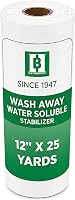
| Towels, terry cloth, velvet and corduroy | Water soluble topping, with a backing under | New brothread water soluble topping, 10 in x 10 yd |
| Caps | Follow the cap frame's instructions | See the caps section below |
| Leather and faux leather | Test a scrap first | None of the four rolls here is described for leather |
Some fabrics sit between two groups, so test a scrap before you commit.
Why stretch matters under the hoop
Stretch matters because stretchy cloth relaxes once it leaves the hoop, and it can pull the stitches out of shape.
A stabilizer that doesn't match the fabric's stretch lets the stitches pull the cloth as it settles. The right stabilizer holds the stitches in place, so the design keeps its shape.
Woven cloth has little give, so a tear away has less stretch to fight, and the stitches sit where you placed them.
Test the stretch before you choose
Stretch decides most of the choice, so test each fabric before you hoop it.
Pull a small corner of the cloth gently in each direction. If it stretches and springs back, treat it as a knit, and if it holds its shape, treat it as woven.
If you're unsure whether you need any stabilizer, see do you need stabilizer for embroidery.
Run a scrap test to choose embroidery stabilizer
Stitch the design on a scrap of the same fabric before you stitch the real piece. Check the back for puckers, and look at how the design sits after you tear or trim the stabilizer.
Woven fabric takes tear away
Firm woven fabric holds its shape under the hoop, so a tear away stabilizer is the usual choice.
Cotton, linen and canvas
New brothread says its tear away roll is best used on firmly woven fabrics and fabrics made from natural fibers. Cotton, linen and canvas fit that description, and the roll tears away once the design is stitched.
Quilting cotton and cotton twill are woven too, so the same rule applies to them.
Our review of the New brothread tear away roll covers specs and drawbacks in more detail.
When a tear away is the wrong pick
A tear away doesn't hold stretchy cloth steady, so a knit shirt can pucker as you stitch. For that job, switch to the cut away type in the next section.
Knits and stretch fabric take cut away
Knits stretch, so a cut away stabilizer that stays in the garment keeps the design from distorting.
T-shirts, polos and fleece
New brothread lists knits, fleece and denim as the best uses for its cut away rolls. It also lists any fabric that is unstable, moves or distorts when tugged.
A T-shirt or a polo is a knit, so a cut away roll is the safer choice for those garments. New brothread says the 10 inch width can be cut to 8 by 10 inches for a 4 by 4 hoop, or to 10 by 12 inches for a 5 by 7 hoop.
Denim
Denim is a woven cloth, but New brothread lists it as a best use for its cut away roll, so the brand points denim toward the cut away. Stitch a scrap first to confirm the stitches sit flat on your piece.
Why cut away keeps its shape
New brothread describes its cut away as permanent support that stays affixed to the embroidery. The brand says the stabilizer also helps the design keep its shape after repeated washing.
For more options in this group, read the best cutaway stabilizers for machine embroidery. If you're torn between the two main types, the cutaway vs tearaway comparison lays them side by side.
Light-colored fabric takes no show mesh
No show mesh is a soft, sheer cut away that keeps the backing from showing through light fabric.
Light-colored knits
New brothread says its no show mesh is best used on stretchy knits in light colors, where it stops the backing from showing. The brand lists chest logos, pique knits, polo shirts, T-shirts, microfiber apparel, silk and satin as good uses.
New brothread compares the mesh to Sulky Soft'n'Sheer, a sheer stabilizer from Sulky.
Dense designs with a tear away underneath
New brothread suggests one layer of light weight tear away under the mesh for heavy stitches, denser designs or thicker fabrics. After stitching, you tear that layer off, and the soft mesh stays in the garment.
Test for show-through
Hold the finished piece up to a light and look for the backing showing through the fabric. If you see a shadow, switch to the mesh for the next piece.
Towels and fluffy fabric take water soluble topping
A water soluble topping sits on top of fluffy fabric and keeps the stitches from sinking into the pile.
Towels and terry cloth
New brothread says its topping film is best used on top of high pile fabrics, towels and terry cloth. The film dissolves completely in cold or warm water, leaving nothing behind.
Velvet, corduroy and other pile
The brand also lists velvet, corduroy, sweater knits and fleece, along with other fluffy fabrics, as good uses. After stitching, put the piece in water, and the film dissolves.
Towels usually need a backing underneath as well, so the loops stay put while you stitch. Read how to use water soluble stabilizer for the steps, and see the best water soluble stabilizers for machine embroidery for other rolls.
Cut the piece to fit your hoop
Cut the piece a little larger than the hoop's outer ring, so the edges stick out on every side.
Measure your hoop before you cut, since a piece that's too small slips under the ring as you stitch. Mark the hoop size on each piece if you cut several at once, so the right one is ready for each design.
Keep the cut pieces flat and dry until you need them.
Pick the roll width for your hoop
Wider rolls give you bigger pieces per cut, which helps when you work on larger hoops.
The 12 inch tear away and the 12 inch no show mesh give the widest pieces in this guide. The 10 inch cut away and the 10 inch topping film are narrower, so they suit smaller pieces.
The tear away, cut away and mesh rolls are each 50 yards long, and the topping film roll is 10 yards. Check the length against how many pieces you plan to cut before you order.
Stitch density and how many layers
Light to medium stitch density works with one layer, and denser designs need more support.
New brothread says its tear away and cut away rolls are medium weight for light to medium stitch density, and that denser designs can take more than one layer. Its no show mesh works with one layer for light stitches, and the brand suggests a light tear away underneath for heavier work.
Dense fills pull harder on the fabric, so plan the second layer before you stitch rather than after a puckered test.
Caps and hats need a cap hoop
Caps need a cap hoop or cap frame, and the stabilizer choice follows what that frame calls for.
Home single-needle machines are flat bed, so caps need a cap hoop or cap frame that is sold separately. Check that the hoop lists your exact machine model before you buy it.
Caps curve, so a flat hoop can't hold one the way it holds a shirt. The cap frame does the holding, so read its instructions before you pick the backing.
Our best hat embroidery hoops and cap frames roundup covers the hoop side, and can a home embroidery machine stitch hats explains the limits. For stabilizer picks on caps, read the best stabilizer for knits, towels and hats.
Leather and unusual fabric need a test
None of the four rolls in this guide is described for leather, so test a scrap before you stitch.
Leather and faux leather keep every needle hole, so a scrap test tells you more than any chart can. Thick or stiff fabric may need a second layer, and the test shows whether one is enough.
If you do try leather, use a fresh needle and a scrap of the same leather before you stitch the real piece. Our guide to embroidery machine needles explains when to change one.
Removing each stabilizer cleanly
Each type comes off a different way, so plan the removal step before you stitch.
Tear away by hand
Tear away stabilizer comes off by hand, starting at the outer edge and working toward the stitching. Pull gently near the design so the stitches don't lift, and clear small bits with snips.
Trim the cut away close
Cut away stays in the garment, so you trim the extra close to the stitching. Trim with care, since cutting into the design can leave the stitches without support.
Dissolve the topping
Water soluble topping dissolves completely in cold or warm water, so put the piece in water after the design is done. Let the piece dry flat, and check the stitches before you move on.
Leave the mesh in place
No show mesh stays in the garment, and any tear away layer under it comes off by hand. New brothread says that leaves the soft mesh against the skin.
A starter set for most projects
A tear away and a cut away cover most woven and knit projects, and a water soluble topping covers towels.
The tear away and cut away rolls are each 50 yards long, so one roll lasts many projects.
Add the no show mesh when you stitch light-colored knits often, since it stops the backing from showing. Keep the topping for pile fabric only, since it won't do the job of a backing on its own.
Common mistakes to avoid
Tear away on stretch fabric
A common mistake is using a tear away on a stretchy knit, since the design can pucker as the fabric moves. Switch to a cut away or no show mesh for that job.
Skipping the scrap test
Many beginners skip the test piece and find the problem on the real garment. A scrap of the same fabric takes a few minutes and shows puckers, shifting and show-through before they cost you a project.
Using topping in place of a backing
Water soluble topping sits on top, so it doesn't replace a backing under the fabric. Pair the two on towels and other pile fabric.
Keep stabilizer scraps away from pets, and bag them up after each project.
Choose embroidery stabilizer by fabric before you stitch
Firm woven cloth gets tear away, knits and denim get cut away, light-colored knits get no show mesh, and towels get water soluble topping over a backing. Test first, since the right stabilizer is the one that holds your fabric steady.
For the machine side of the decision, start with embroidery machines for beginners. If you still wonder whether you need stabilizer at all, do you need stabilizer for embroidery answers that first.
Frequently asked questions
How do I choose an embroidery stabilizer?
Start with the fabric and check how much it stretches. Firm woven cloth usually takes a tear away, knits take a cut away, light-colored knits take a no show mesh, and towels take a water soluble topping, so test on a scrap before you stitch the real piece.
Can I use tear away stabilizer on a T-shirt?
It's not the best choice, since a T-shirt stretches and a tear away doesn't hold the design steady as the fabric moves, so the stitches can pucker. Use a cut away or a no show mesh instead, and keep the tear away for firm woven fabric like cotton or linen.
Do I need stabilizer on towels?
Most towel projects need one. A water soluble topping goes on top to keep the stitches from sinking into the loops and dissolves in water after stitching, while a cut away or tear away backing underneath keeps the towel steady while you stitch.
Is no show mesh the same as cut away stabilizer?
No show mesh is a soft, sheer type of cut away stabilizer. New brothread says its mesh is semitransparent, so the backing doesn't show through light-colored fabric, and for heavier designs the brand suggests a light tear away layer underneath.