Cutaway vs Tearaway Stabilizer: Which Should You Use?
Pick a cutaway for knits and stretchy fabric, and a tearaway for firm woven fabric like cotton, linen and canvas. In the cutaway vs tearaway stabilizer choice, a cutaway stays under the design for good, and a tearaway comes off once you finish stitching.
On this page (14 sections)
- How a cutaway and a tearaway work
- What each type leaves on the back
- Which fabrics suit each stabilizer
- Applique and lace work with either roll
- How the two 12 inch rolls compare
- How stitch density changes the choice
- Cut sizes for common hoops
- Hooping and removing either roll
- Common mistakes and fixes
- A third option for light-colored knits
- Choosing by project
- Which roll to buy first
- Quick picks for common projects
- Cutaway vs tearaway stabilizer: which to pick
Use a cutaway stabilizer for knits and other stretchy cloth, and a tearaway for firm woven fabric like cotton, linen and canvas. That is the whole cutaway vs tearaway stabilizer choice in one line.
We compared two rolls from New brothread, both 12 inches wide and 50 yards long, so only the stabilizer type changes. The cutaway weighs 2.5 oz and the tearaway weighs 1.8 oz, and they differ most in what happens after you stitch.
 Best for firm woven fabric
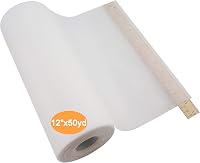
New brothread 12 in Tear Away Stabilizer Roll
 Best for knits and stretch fabric
New brothread 12 in Cut Away Stabilizer Roll
How a cutaway and a tearaway work
A cutaway stays in the garment for good, and a tearaway comes off by hand once the design is stitched.
With a cutaway, you trim the extra stabilizer close to the stitching, and the part under the design stays. With a tearaway, you pull the stabilizer away, so little is left behind.
What a cutaway does for the design
New brothread calls its cutaway a permanent stabilizer that stays affixed to the embroidery. The brand says it also helps the design keep its shape after repeated washing.
That matters most on fabric that stretches, since the stitches can pull the cloth out of shape as you work.
What a tearaway does for the design
New brothread calls its tearaway temporary support that tears away easily and still gives adequate stability. It recommends the roll for firmly woven fabrics and fabrics made from natural fibers.
Because it's temporary, it leaves less stabilizer in the garment, but it can't match a cutaway for long-term support.
What each type leaves on the back
A cutaway leaves a layer on the back for good, while a tearaway leaves almost nothing.
After you trim a cutaway, a border of stabilizer stays under the stitches, and that border is the support. After you tear a tearaway, small bits can stay tucked in the stitches, and you clear them with snips.
Both types sit under the fabric in the hoop, so setup is the same. Only the removal step and the backing left behind change.
For a shirt you'll wear and wash often, New brothread's point about keeping the design's shape after repeated washing is the detail to weigh.
Which fabrics suit each stabilizer
Match the stabilizer to how much the fabric moves. A cutaway handles stretch, and a tearaway handles cloth that holds its shape in the hoop.
Knits, fleece and denim
New brothread lists knits, fleece and denim as the best uses for its cutaway, along with any fabric that is unstable or distorts when tugged.
A T-shirt or polo is a knit, so a cutaway is the safer pick. For more options, see the best stabilizer for knits, towels and hats.
Woven cotton, linen and canvas
New brothread says its tearaway is best on firmly woven fabrics and fabrics made from natural fibers. Cotton, linen and canvas fit, since they hold their shape in the hoop.
Quilting cotton and cotton twill are woven too, so the same rule applies. Our review of the New brothread tear away roll covers that roll in more detail.
Towels, velvet and corduroy
Neither roll is a topping, and towels, velvet and corduroy need one. The pile can swallow stitches, so a water soluble topping on top keeps the design sitting clear.
Read how to use water soluble stabilizer for the steps, or compare rolls in our best water soluble stabilizers for machine embroidery roundup.
Applique and lace work with either roll
Either roll works for applique and lace, so the fabric under the design still decides the pick.
New brothread lists applique and computerized lace embroidery among the uses for both rolls.
On firm woven cloth, the tearaway follows the same rule as any woven project. On knits, the cutaway gives applique edges more support.
Lace has many small stitches and open areas, so stitch a scrap first to see how much support the design needs.
How the two 12 inch rolls compare
The two rolls match on width, length and material, so weight and removal are the real differences.
| Product | Best for | Size | Weight | After stitching | Our score |
|---|---|---|---|---|---|
| New brothread 12 in Tear Away Stabilizer Roll | firm woven fabric | 12 in x 50 yd | 1.8 oz, medium | Tears away by hand | 8.3 |
| New brothread 12 in Cut Away Stabilizer Roll | knits and stretch fabric | 12 in x 50 yd | 2.5 oz, medium | Stays in the garment | 8.6 |
The cutaway weighs 2.5 oz and the tearaway weighs 1.8 oz, so the cutaway gives more body under the design.
Our score weighs specs, features and buyer feedback against what you're shopping for. The cutaway scores a little higher because it suits knits, fleece, denim and any fabric that moves, while the tearaway suits firm woven cloth.
How stitch density changes the choice
Both rolls suit light to medium stitch density, and New brothread says denser designs can take more than one layer. That limit is the same for the cutaway and the tearaway.
The cutaway is the heavier of the two, so it adds more body under dense work. Check how it feels on thin cloth with a scrap before you commit.
Cut sizes for common hoops
Cut the stabilizer a little larger than your hoop, so its edges stick out past the ring on every side.
For its 10 inch cutaway roll, New brothread suggests 8 x 10 inch pieces for a 4 x 4 hoop and 10 x 12 inch pieces for a 5 x 7 hoop. A 12 inch roll gives you the same sizes with more width to spare.
| Hoop | Piece to cut |
|---|---|
| 4 x 4 in | 8 x 10 in |
| 5 x 7 in | 10 x 12 in |
For other sizes, see our guide to embroidery hoop sizes. At 50 yards, each roll is 150 feet long, so one roll cuts pieces for many projects.
Hooping and removing either roll
Hoop the stabilizer and the fabric together, with the cloth pulled taut but not stretched. Keep cut-off scraps away from pets, and bag them up after each project.
Removing a cutaway
Once the design is done, trim the extra cutaway close to the stitching without cutting into the design. Leave the border under the stitches in place, since that is the support.
Removing a tearaway
Tear the stabilizer away slowly, starting at the outer edge and working toward the stitching. Pull gently near the design so the stitches don't lift, and use snips for any small bits left behind.
Common mistakes and fixes
Most problems come from a stabilizer that doesn't match the fabric, so check the fabric first.
Using a tearaway stabilizer on stretchy knits
The design can pucker as the knit moves, so switch to a cutaway before you change anything else. A no show mesh is another option for light fabric, which our fabric guide covers.
Using a cutaway stabilizer on thin cloth
A 2.5 oz cutaway may be more than a light blouse needs, so stitch a scrap before the real piece. If the cloth is very light, a lighter stabilizer may suit it better than either roll here.
Puckers on woven cloth
If woven cloth still puckers on a tearaway, check that the hoop isn't stretching the cloth. Also check that the stabilizer is large enough to sit flat under the design.
Skipping the scrap test
Stitch a small test on a scrap of the same fabric before you stitch the real piece. It shows puckering, shifting and any backing that shows through.
Forgetting the second layer
Denser designs can take more than one layer, according to New brothread. Plan the extra layer before you stitch, since one layer may not hold a heavy fill steady.
A third option for light-colored knits
A no show mesh is a soft, sheer cutaway made for light-colored knits, where a regular cutaway can show through.
New brothread says its mesh is semitransparent, so the backing doesn't show through light fabric. It lists polo shirts, T-shirts and microfiber apparel as good uses.
For heavy stitches or denser designs, the brand suggests one layer of light weight tearaway under the mesh for extra stability. You tear that layer off after stitching, and the soft mesh stays in the garment.
Our fabric guide sorts every common fabric into a stabilizer type.
Choosing by project
Start with what you're making and the fabric it uses.
Shirts and blouses
Woven shirts and blouses usually take a tearaway, while knit tees and polos take a cutaway. A blouse can be woven or knit, so check the fabric before you pick.
Bags and home decor
Canvas bags, linen pillow covers and cotton table runners are woven, so a tearaway usually fits. A dense design on thick canvas may need a second layer.
Hats and caps
Caps need a cap hoop or cap frame, which is sold separately for home machines. Check that the hoop lists your model, and follow its directions for the backing.
Our best hat embroidery hoops and cap frames roundup covers the hoop side.
Which roll to buy first
Buy the roll that matches the fabric you stitch most often.
If most of your projects are knit shirts, fleece or denim, start with the cutaway. If most are cotton, linen or canvas, start with the tearaway.
If you stitch both kinds of fabric, one roll of each covers most everyday projects. Each roll is 150 feet long, so neither runs out quickly.
Quick picks for common projects
Most everyday projects are either woven or knit, and the table shows the pick for each.
| Project | Better pick | Why |
|---|---|---|
| Button-up cotton shirt | Tearaway | Firm woven cloth holds its shape in the hoop |
| Canvas tote | Tearaway | Canvas is firm woven fabric |
| Linen napkin | Tearaway | Natural fibers that hold their shape |
| T-shirt or polo | Cutaway | Knits stretch and need permanent support |
| Fleece jacket | Cutaway | New brothread lists fleece as a best use for its cutaway |
| Denim jacket | Cutaway | New brothread lists denim as a best use for its cutaway |
| Terry towel | Water soluble topping, with a backing | Pile fabric needs the topping on top |
Cutaway vs tearaway stabilizer: which to pick
Pick a cutaway if you're stitching knits, fleece or denim, or any fabric that moves when you tug on it.
Pick a tearaway if you're stitching firm woven fabric like cotton, linen or canvas, and you want the stabilizer gone once the design is done.
If you're torn on a project, stitch a scrap with each roll and compare the backs. The one that keeps the design flat and the back easy to clean is the right pick for that fabric.
Our cutaway stabilizer roundup compares more cutaway picks. If you're not sure you need stabilizer at all, do you need stabilizer for embroidery answers that first.
If you're new to home embroidery, our embroidery machines for beginners guide starts with the machine.
Frequently asked questions
What is the difference between cutaway and tearaway stabilizer?
A cutaway stays in the garment for good, and you trim the extra close to the design. A tearaway comes off by hand once the design is stitched, so the fabric's stretch decides which one suits your project, since stretchy cloth needs the support a cutaway gives.
Is cutaway stabilizer better for knits?
For most knit shirts, yes, because a cutaway stays in the garment and keeps the stitches from pulling and puckering as the fabric stretches. A tearaway can let a stretchy design distort, so keep it for firm cloth like cotton or linen, which hold their shape.
Can you use tearaway stabilizer on a T-shirt?
It's not the best choice, since a T-shirt is a knit and a tearaway doesn't hold the design steady while the shirt stretches. Use a cutaway or a no show mesh instead, and keep the tearaway for firm woven fabric like cotton or linen.
Do you need stabilizer for every embroidery project?
Most machine embroidery needs one, because fabric alone can shift and pucker inside the hoop. Stitch a test on a scrap first so you can see how your fabric and design behave, then pick the stabilizer type from what you see.