How to Use Water Soluble Stabilizer for Embroidery
To use water soluble stabilizer for embroidery, hoop it with your fabric, stitch, then rinse it away in cold or warm water. It dissolves completely, so nothing stiff is left on the finished piece.
On this page (11 sections)
- What does water soluble stabilizer do?
- What do you need before you start?
- How do you use water soluble stabilizer step by step?
- Will the stitches stay after rinsing?
- Should you use it as a topping, a backing or both?
- Can you use sticky water soluble stabilizer?
- What else can a sticky sheet do?
- How do you handle water soluble stabilizer on delicate fabric?
- Which water soluble stabilizer should you buy?
- What mistakes should you avoid with water soluble stabilizer?
- Pick the right way to use water soluble stabilizer for embroidery
You use water soluble stabilizer by hooping it with the fabric, stitching the design, then rinsing it away in water. It's a temporary support that dissolves completely, so nothing stiff is left on the finished piece.
This guide walks through how to use water soluble stabilizer for embroidery, including toppings, rolls and sticky sheets. If you're new to machine embroidery, embroidery machines for beginners covers the whole setup.
What does water soluble stabilizer do?
It holds the fabric steady while you stitch, then dissolves so nothing stiff is left behind. That makes it a good pick when you don't want a backing to show or feel stiff on the finished piece.
Sulky makes Solvy, and the brand says it works as a design template, a pattern guide and a stitch support. Sulky also says it's ideal when you don't want any stabilizer to show on the top or the bottom.
The brand names monogramming, buttonholes, cut work and heirloom sewing among its uses.
What do you need before you start?
You need a hoop that fits your machine, your water soluble stabilizer, a pair of snips and a sink or basin for rinsing. Snips are handy for trimming jump stitches and loose threads before the rinse.
Keep a towel nearby to dry the piece once the rinse is done. Cut thread with snips rather than pulling it, so you don't tug the stitches.
How do you use water soluble stabilizer step by step?
There are three steps: hoop, stitch and rinse. They're the same for most jobs, though a topping goes on top of the fabric rather than under it.
Hoop the stabilizer with the fabric
Cut a piece a little larger than the design, then hoop it with the fabric. Keep the fabric smooth and flat so the stitches land where the design says they should.
For a topping, New brothread says to put or hoop the film on top of the fabric, then stitch. Hoop just snug enough to hold the layers, since a tight hoop can stretch the fabric.
Stitch the design
Start the machine and stitch as you normally would. Keep your fingers clear of the needle while the machine runs.
Watch the first few stitches, and if the fabric starts to shift, stop and check the hoop.
How to rinse away water soluble stabilizer
Soak the piece in cold or warm water until the stabilizer dissolves. New brothread says its film and sheets dissolve completely in either.
Trim the extra stabilizer away from the stitching first, so less has to dissolve. Rinse until no film or paper is left on the fabric, then lay the piece flat to dry.
If a bit of film remains after rinsing, soak the piece again in fresh water and check the edges.
Will the stitches stay after rinsing?
Yes, the stitches stay, because the thread holds the design and only the stabilizer dissolves. Rinsing removes the support, not the embroidery.
Your fabric gets wet too, so check its care label before you stitch. If you're unsure, soak a scrap of the same fabric first.
Should you use it as a topping, a backing or both?
Use it as a topping on fluffy fabric and as a light backing on thin or delicate fabric. Sulky calls Solvy lightweight, so stretchy knits and dense designs also need a cut away or tear away stabilizer under the fabric.
A topping keeps the stitches on the surface, while a backing supports the design from below. If you're unsure which to use, stitch a small sample on a scrap of the same fabric first.
New brothread says its topping film greatly helps stitches stay on top of towels, velvet and corduroy. At about 25 microns, the film is very thin.
For knit and towel picks, see best stabilizer for knits, towels and hats.
Can you use sticky water soluble stabilizer?
Yes, a sticky water soluble sheet holds small pieces in place without basting. New brothread says it suits pockets, cuffs, collars and socks, where a hoop can be awkward.
The pack has six sheets, each 8.5 by 11 inches, with a strong adhesive on one side. Peel off the release sheet and stick the sheet in place, then stitch.
The brand says the sheets work as a backing or a topping. You can print, copy or draw the design on a sheet.
On light-colored fabric, New brothread suggests a water erasable marker, since printer ink may not dissolve fully.
What else can a sticky sheet do?
It can carry a pattern for hand embroidery and keep hoop marks off napped fabric. New brothread says its sheets suit hand embroidery, needle punch, cross stitch and quilting patterns.
You print, copy or draw the pattern on the sheet, stick it to the fabric, then stitch by hand or by machine. Once the stitching is done, rinse the sheet away as you would for machine work.
The brand also says the sheets eliminate hoop marks on napped fabrics like velvet, brushed flannel, corduroy, towel, fleece and silk. If the fabric is delicate, try the sheet on a scrap first.
How do you handle water soluble stabilizer on delicate fabric?
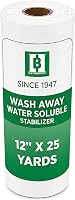
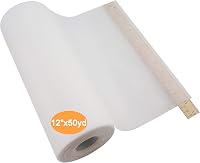
Use a light touch and a wash-away roll. HBI says its roll is made to give clean finishes on delicate fabrics, and that it dissolves completely after use.
Hoop the fabric just snug enough to hold it, because a tight hoop can mark or stretch delicate cloth. HBI also says the roll works alongside cutaway stabilizers, which helps when a design needs more support.
Keep the roll dry until you use it, since water dissolves it.
Which water soluble stabilizer should you buy?
Pick the form that matches the job. A film suits fluffy fabric, a sticky sheet suits small pieces and patterns, and a roll suits delicate fabric and light designs.
| Form | Best job | Example |
|---|---|---|
| Topping film | Towels, velvet and corduroy | New brothread, 10 in x 10 yd |
| Sticky sheet | Pockets, cuffs, collars and printed patterns | New brothread, six 8.5 x 11 in sheets |
| Wash-away roll | Delicate fabric and light designs | HBI, 12 in x 25 yd |
| Pattern-guide roll | Designs where no stabilizer should show | Sulky Solvy, 12 in wide |
A longer roll is handy if you stitch often, since you'll reach for fresh stabilizer less. The HBI roll is 25 yards long, while the Sulky roll is about 9 yards.
For more options, see best water soluble stabilizers for embroidery.
If you're still deciding whether you need one at all, do you need stabilizer for embroidery answers that first. For fabrics that call for cut away or tear away instead, how to choose an embroidery stabilizer by fabric helps you sort them.
What mistakes should you avoid with water soluble stabilizer?
The main ones are printer ink on light fabric, skipping a topping on fluffy fabric and rinsing too early.
Printer ink may not dissolve fully in water, so a water erasable marker is the better choice on light fabric. Without a topping, stitches on towels or velvet can sink into the pile.
Rinsing too early can leave bits of stabilizer on the fabric, so keep going until the piece is clear. Using it alone under a stretchy knit is another common slip, since the knit still needs a cut away or mesh.
Pick the right way to use water soluble stabilizer for embroidery
Pick a topping film for towels, velvet and corduroy. Pick a sticky sheet for small pieces like pockets and cuffs, or when you want to print a pattern onto the fabric.
Pick a wash-away roll for delicate fabric and light designs, and add a cut away or tear away under stretchy fabric. Practice on a scrap first, so you can see how the rinse goes before you stitch the real piece.
Frequently asked questions
How do you use water soluble stabilizer?
Hoop the stabilizer with your fabric, stitch the design, then soak the piece in cold or warm water until the stabilizer dissolves. Put a topping on top of fluffy fabric and a light backing under thin fabric, then rinse until no film or paper is left and lay the piece flat to dry.
Is water soluble stabilizer used on the top or the bottom?
Both, depending on the job: a topping goes on top of the fabric and keeps stitches from sinking into towels, velvet and corduroy, while a backing goes under thin or delicate cloth. Some sticky sheets work as either one, and all of them dissolve afterward.
Can you print on water soluble stabilizer?
Yes, some sheets can be printed, copied or drawn on. New brothread's sticky sheets are printable and stick to the fabric before you stitch, and on light-colored fabric the brand suggests a water erasable marker, since printer ink may not dissolve fully.
Does water soluble stabilizer leave residue?
It's made to leave nothing behind once it dissolves, and New brothread says its topping dissolves completely in cold or warm water. Rinse until no film or paper is left on the fabric, because rinsing too early can leave bits behind before you dry the piece.